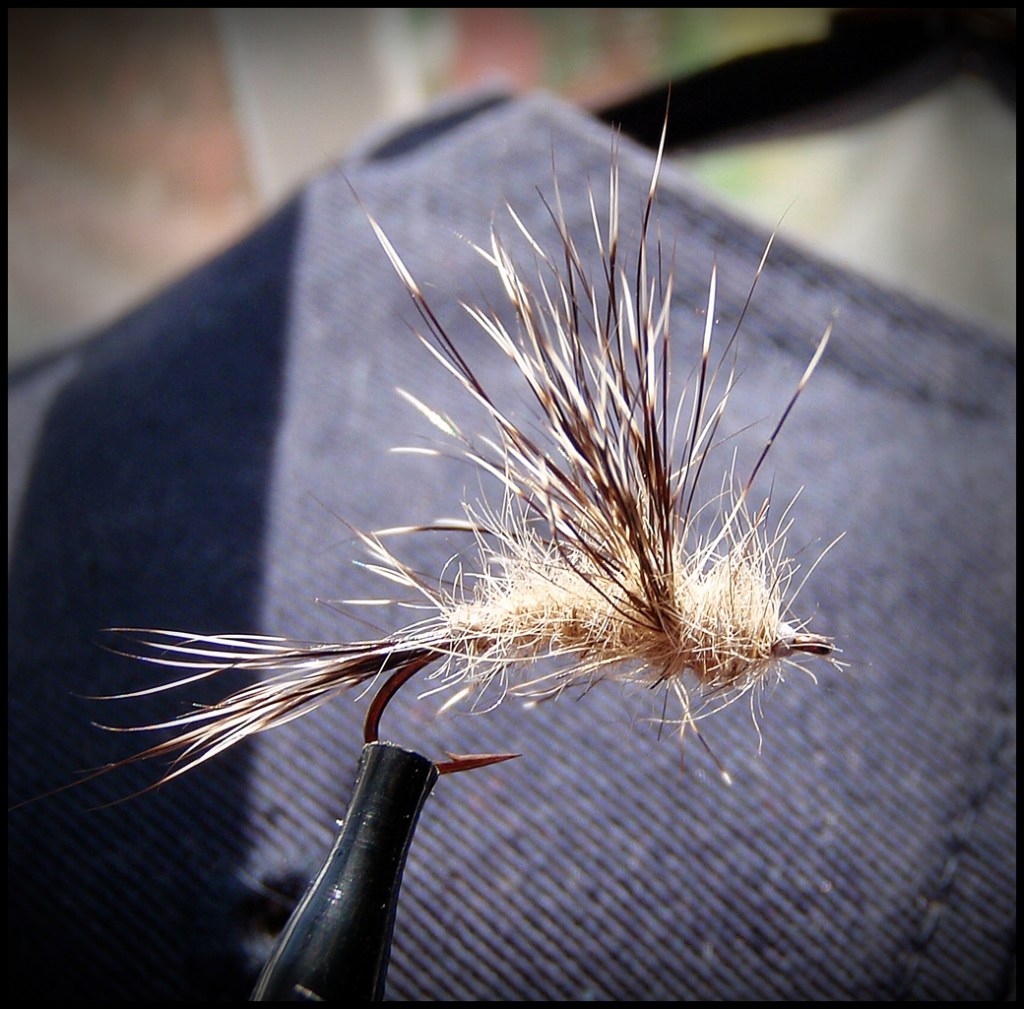
Lately I’ve been messing around with tying “one-animal” flies. That is, all materials come from the same beast, excepting the thread and the hooks. The post that I did a while back on the Casual Dress, got me thinking about this topic. The Casual Dress almost makes the cut – but the ostrich herl head rules it out. The first animal that I attempted is Marmota monax; the lowly groundhog – or woodchuck as some of you may say.
I’ve seen groundhog guard hair mentioned as a tailing material from time to time – so I picked up a patch of hog a few years ago, but never really used it. The guard-hairs are great for tails, but I found that the banded coloration makes for nice looking wings as well. The underfur is quite unruly, it is not easily dubbed – and you really need to use a dubbing loop to make it work at all. That said, it seems to float well. My “extensive” testing ( in a glass of water) revealed that it produces a pretty buoyant fly.
I have to admit that these are some fairly ugly flies. But there’s something buggy about them – I think I like them. Please note that there has been no field testing of these flies. This is merely an experiment at the vise – I’ll update you on the results if and when these make it to the stream.

Woodchuck Comparadun:
Hook: Curved Shank, 3X-long hook
Body: Woodchuck underfur, tied in using a dubbing loop
Tail: Woodchuck guard hair
Wing: Woodchuck guard hair – I tied this in using a dubbing loop like a “fur-hackle”, then shaped it into the comparadun style “fan-wing”.
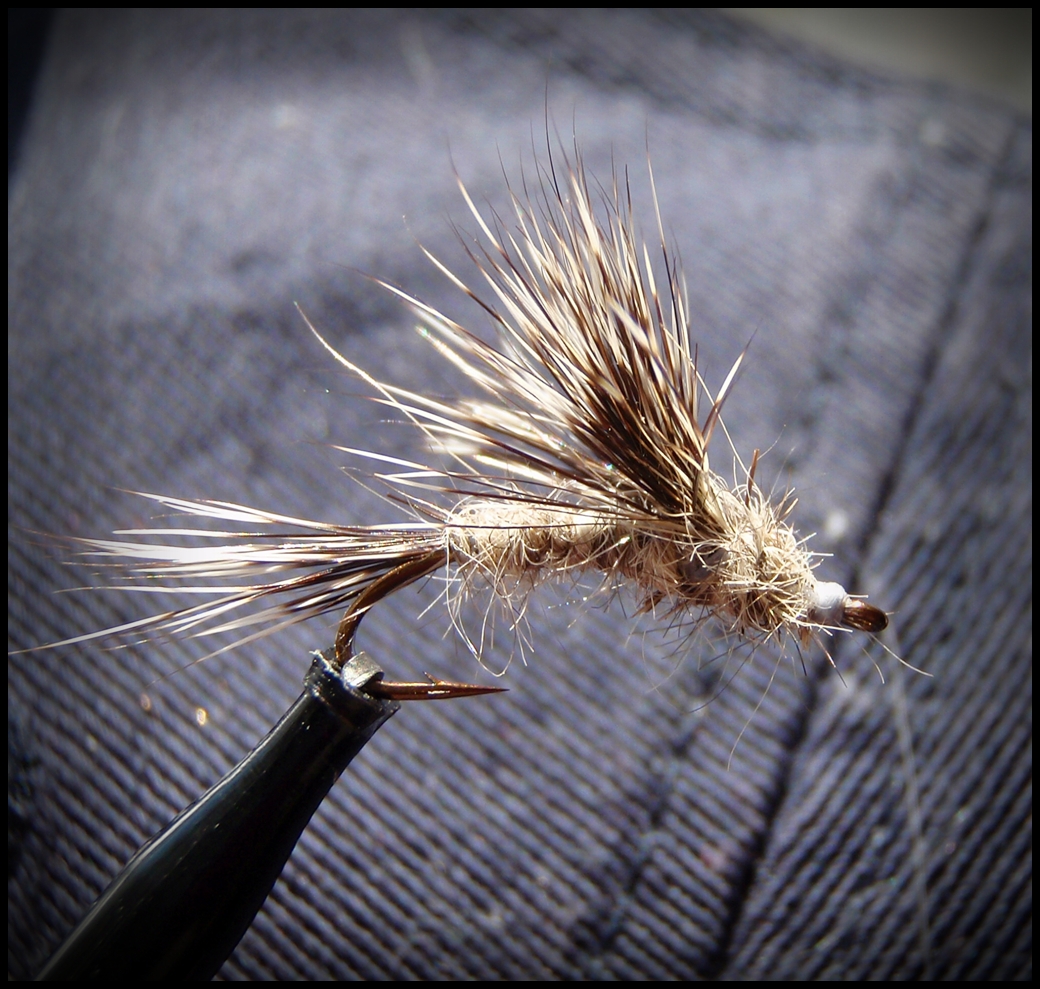
Woodchuck Emerger:
Hook: Curved Shank, 3X-long hook
Body: Woodchuck underfur, tied in using a dubbing loop
Tail: Woodchuck guard hair
Wing: Woodchuck guard hair.
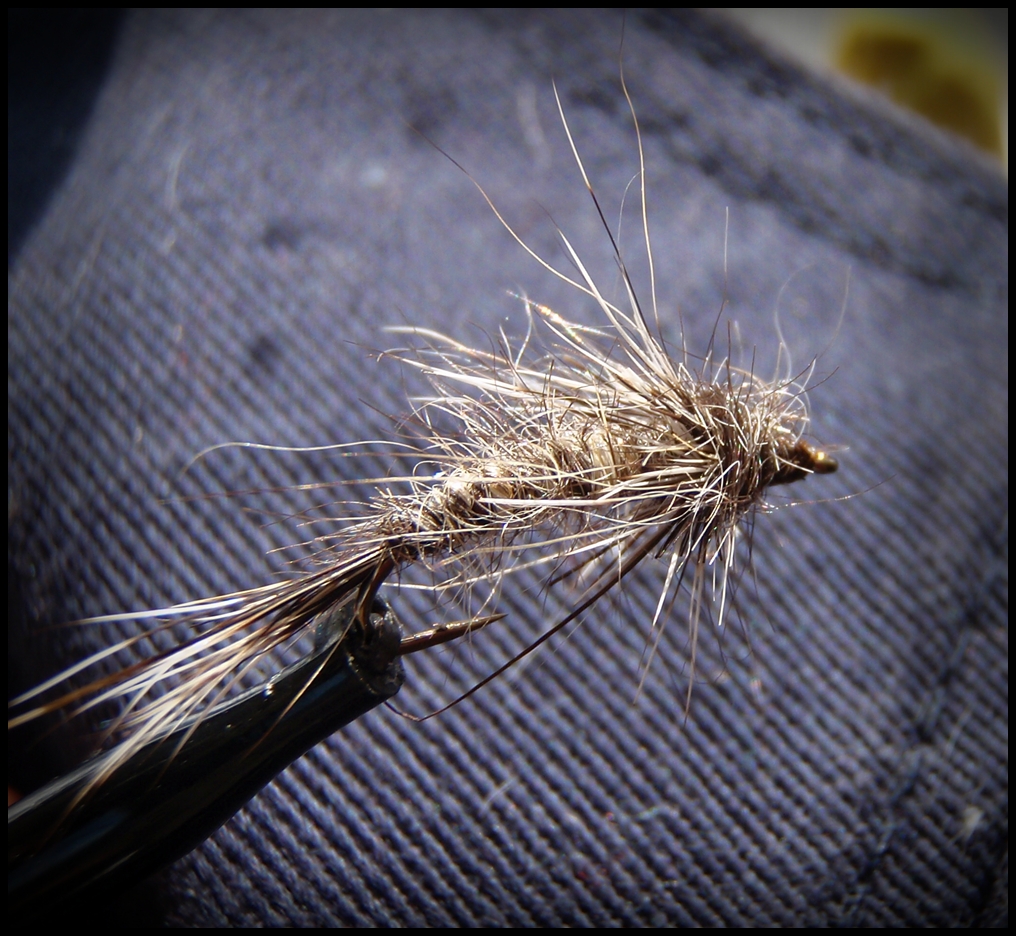
Woodchuck Comparadun:
Hook: Curved Shank, 3X-long hook
Body: Woodchuck underfur, tied in using a dubbing loop
Tail: Woodchuck guard hair
“Legs”: Woodchuck guard hair – tied in using a dubbing loop like a “fur-hackle”.



 Casting Around
Leave a comment