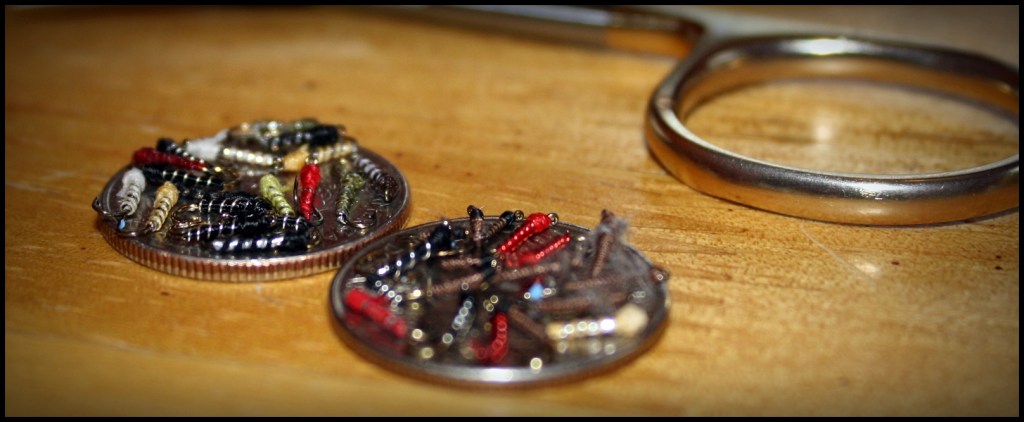

Midge #1 Sketch is based on a photo from the Winona Fly Factory Blog.
Well, I had been snowbound for almost a week. The children didn’t have school all week – and they were getting a little stir-crazy (me too). Normally with snow piled up outside, I’d have the vise out and be tying like mad. Well – I was mostly otherwise occupied (see above about children not having school).

However, I did find one afternoon to get a few flies tied. Looking forward to some late winter and early spring fishing I find myself thinking about midges. This probably conjures different images for different anglers. For those of you out west, midges may make you think about the large tailwater rivers. For those of us in Pennsylvania (think Central Pennsylvania streams) or in the midwest (think the Driftless Region), midges usually mean smallish, limestone spring creeks. In either case, midges can be a blessing and a curse.
A Blessing: It’s winter. You’ve been fly fishing deprived for weeks, maybe even months. You’ve gone through all your Gierach, you’ve read through all the latest magazine issues (maybe even ranted about all the articles about fly fishing for freshwater dorado in Bolivia – or is that just me?). Finally a little break in the weather, corresponding with a break in your schedule, and you can finally get on the water. For me, this usually means Spring Creek in central, PA, but for you maybe it’s the South Platte in Colorado or Waterloo Creek in Iowa. You’ve got the heavy nymphs, maybe some buggers – but in the back of your mind you’re hoping for midges. What joy these minutiae can bring. It’s just such a wonderful thing to fish to actively feeding, and maybe even rising fish in the dead of winter. A blessing and…
A Curse: Maybe you have it all figure out – me I’m still schooled sometimes. You see the fish, actively feeding, you see the fish rising – you may not see the bugs, but you know they’re there. Sometimes, it seems like no matter how small your fly is – the natural is half that size. If you’re getting a little older – you may have trouble tying the thing on (I’ve given in and bought some cheater glasses this year). If you manage to tie the fly on, and manage to get a hit, you can’t get a hook-up. If you get a hook-up, you’re so excited (and out of practice) that you immediately break the tippet, or pull the fly out. Maybe it’s just me – but midge fishing can be frustrating sometimes (but a good kind of frustrating).
The Patterns
There are more midge patterns than fly fisherman. You could never tie them all (it might be fun trying though). However, there are only a few that I fish time after time. Maybe I could find “better” patterns – but after trying other flies and variations, I’ve settled on these as my favorites. Of course, I always tie up some new patterns before heading out, it’s always fun to experiment. These patterns are all pupa imitations – I’ll need to work on another post to feature some dries.

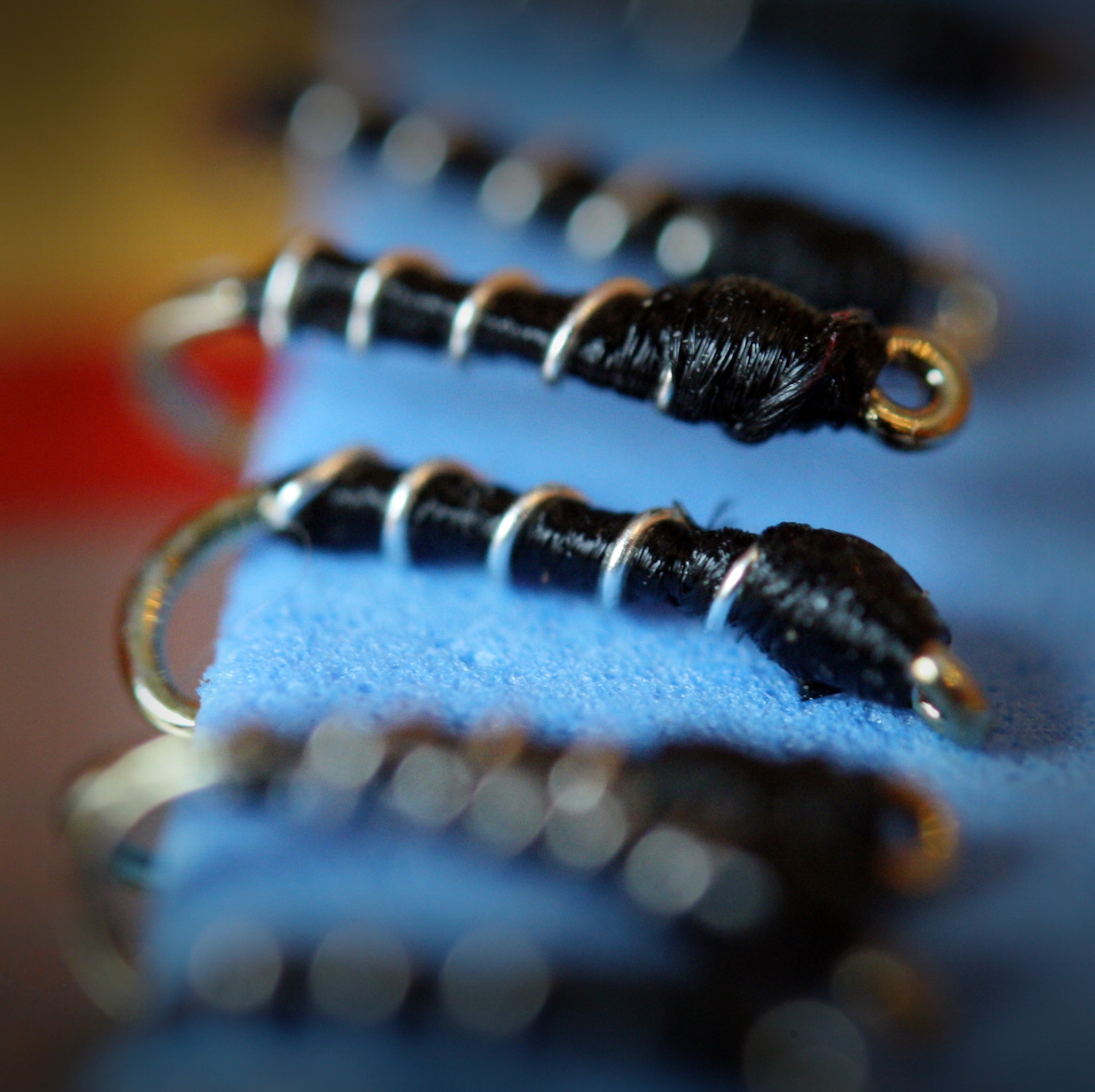
Black Thread Midge:
Hook: Standard dry fly hook, sizes 18-26. You could use a curved scud-style hook, but I like to keep my hook selection to a minimum, so I just stick with standard dry fly hook.
Body: Black Thread. I use Uni-Thread, 8/O. This is a bonded thread. Others prefer a flat thread that you can un-twist, to make a smoother body. I like the texture of the Uni-Thread better, it is not so smooth and has a little “bite” to it. It’s what I’m used to. But use any black thread you like.
Rib: Small Diameter Silver Wire
The black thread midge is my go to pattern for midges. Is it the best? Who knows, all that I know is that I use it and I catch fish on it. I like the simplicity of the pattern. I feel like the silver wire rib makes a nice contrast with the black thread. In short I feel confident fishing it. It may seem like a cliche but, you’ll catch more fish if you have confidence in the pattern you’re fishing. You can vary the color of the thread and wire rib of this fly. You’ll find a million variations on this basic pattern – but this is the one I’ve settled on for now. I like to site fish it underneath to actively nymphing fish, or fish it in or near the film to risers.

Al’s Rat:
Hook: Standard Dry fly hook. Size 18 – 26 or so.
Body: Originally Brown mono-cord. I used brown Coats & Clark sewing thread. I like to twist the thread to form segmented body (like the Yong Special shown below).
Head: Sparsely dubbed Muskrat underfur.
The Al’s Rat was developed by Pennsylvania Fly Tyer Al Miller. Read more about it on the Little Lehigh Fly Shop Website. Being a Pennsylvania Fly Fisher I always have a special place in my fly box for PA patterns. Again, this is a nice simple pattern, tied with two materials. Thread and muskrat fur. I imagine you could change up the color scheme – but I usually tie it just as shown.
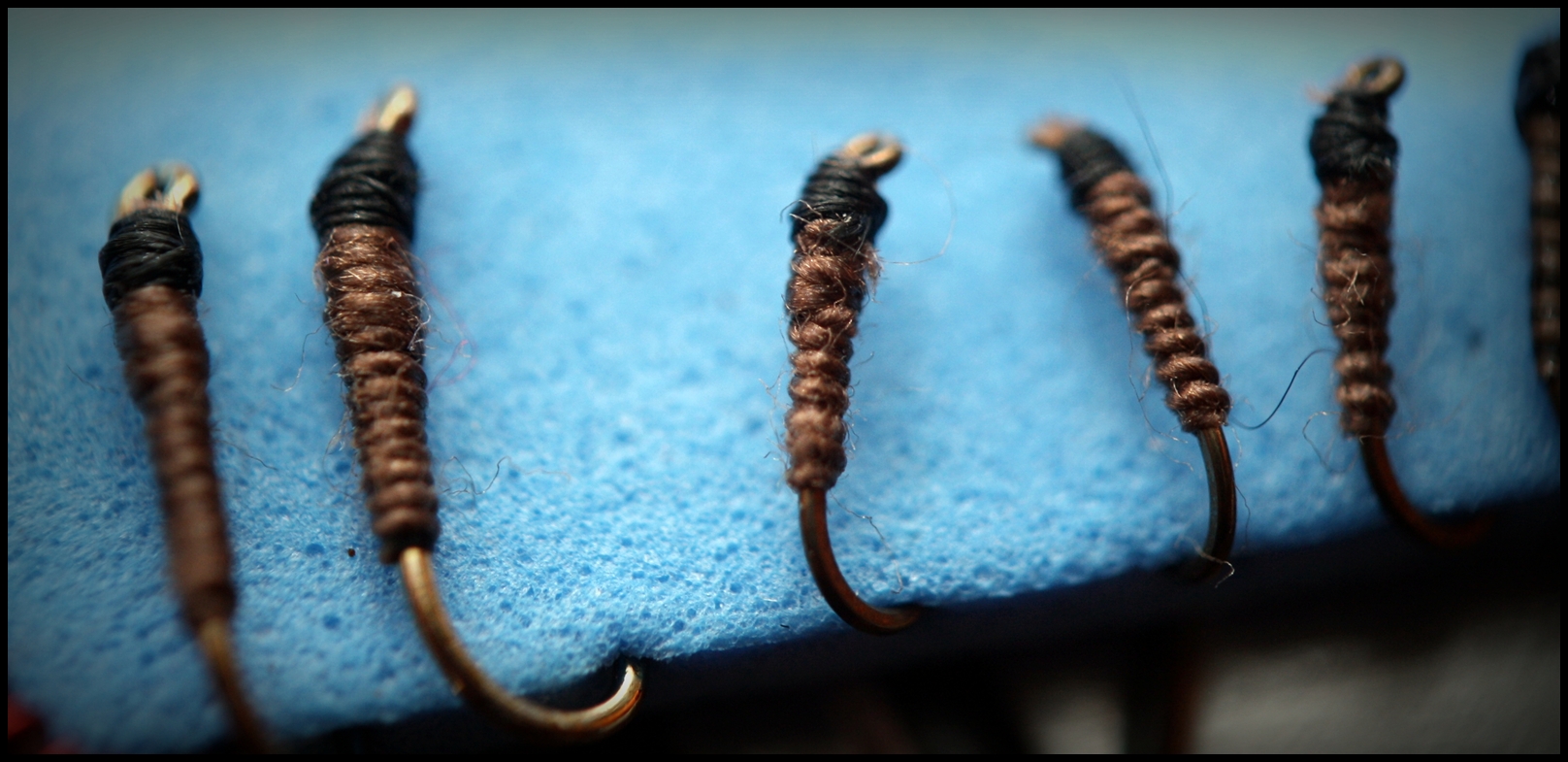
Yong Special:
Hook: Standard Dry fly hook, size 18-26. (Although a look at Andy Kim’s web page shows an improved Yong Special tied on what looks like a 3x-long curved shank nymph hook)
Body: Coats & Clark sewing thread. Summer Brown shown, also cream, olive. etc. The thread is twisted to form a segmented body.
Head: Black Tying Thread.
Another nice simple pattern. Although magnifying those size 24 flies shows how they are not as neat as I thought – oh well they’ll still catch fish. Andy Kim is now selling his flies. Check out Andy’s Website.
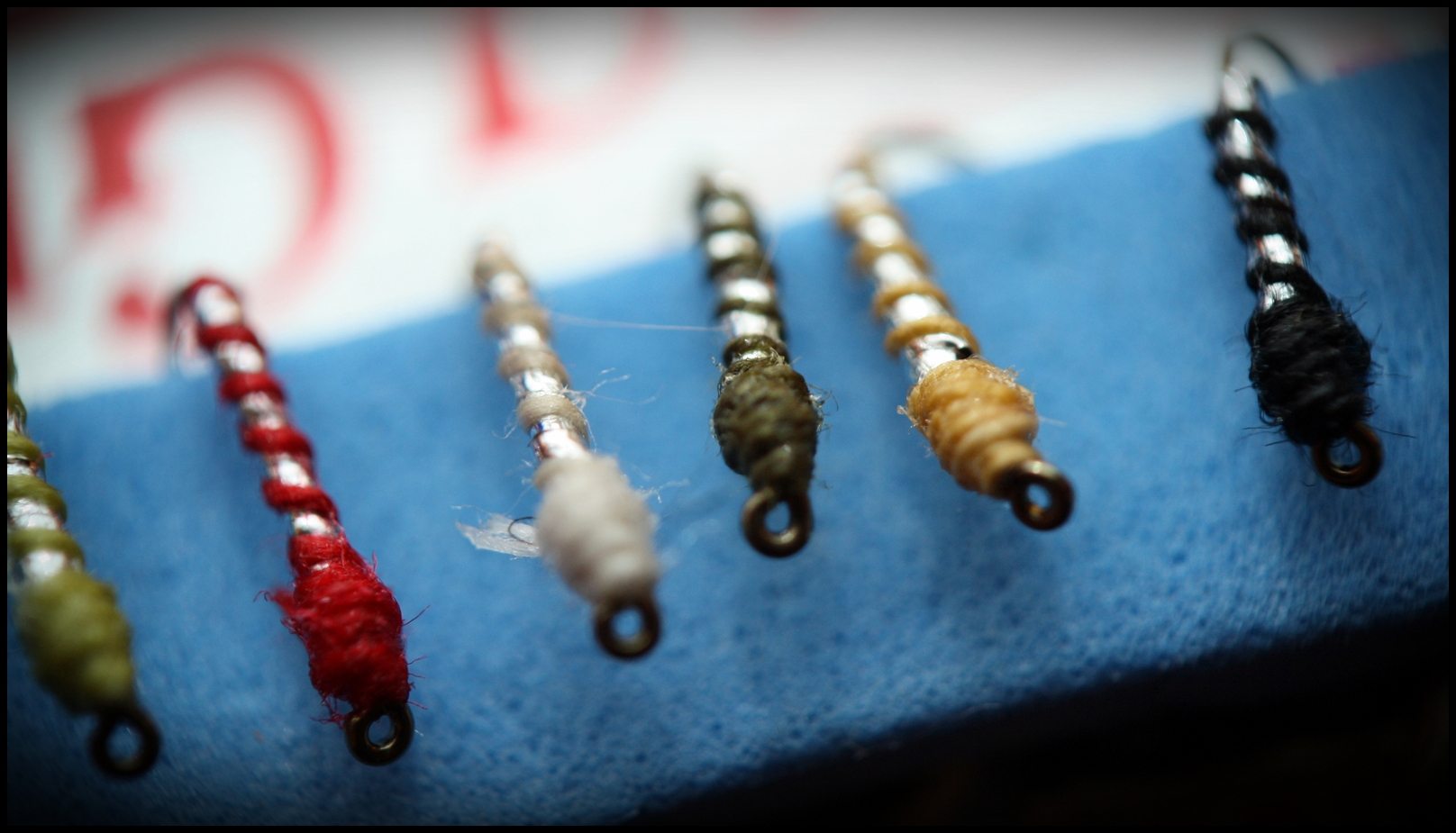
Diamond Midge:
Hook: Standard dry fly hook or any hook of your choice. Size 18 to 24.
Body: Underbody of flat silver tinsel, ribbed with a single strand of DMC Embroidery Floss. The floss is made up of six strands – use one strand. I tie them mostly in black, white, red, brown and shades of cream, tan and olive.
Head: DMC Embroidery floss. Create head with multiple half-hitches of the embroidery floss rib.
This pattern comes from a book called Midge Magic by PA fly fishers Don Holbrook and Ed Koch. This is a nice little book, it presents several new midge patterns and features some nice photos of naturals compared to the patterns. The focus is definitely on the subsurface imitations. Many of the patterns are tied with DMC Embroidery floss and Coats & Clark sewing thread. So you’ll need to make a trip to the craft store or sewing store. The nice thing about this pattern is that the DMC floss comes in dozens (maybe hundreds) of colors, so you can tie these flies in many subtle variations.






 Casting Around
Leave a reply to Vince Villavicencio Cancel reply